Airspace across the Middle East is more crowded than ever, yet access to it is becoming increasingly restricted. With regional tensions rising under the ongoing context of “Operation Epic Fury,” the aviation systems that normally keep the Gulf Cooperation Council (GCC) connected to the rest of the world are under significant pressure. Key aviation hubs such as Dubai International (DXB), Abu Dhabi (AUH), and Hamad International Airport in Doha have been dealing with temporary shutdowns, diverted routes, and widespread delays.
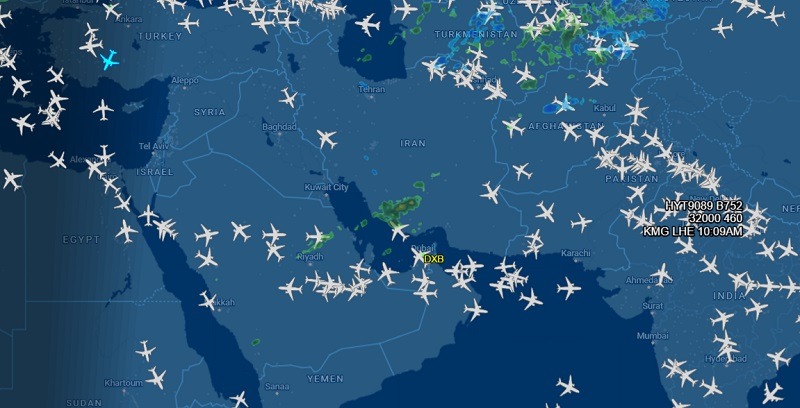
Image Courtesy: Flight Aware, 03 March 2026
For the more than one million passengers currently travelling through or stuck within the region, airline guidance has often boiled down to one frustrating instruction: wait. Remaining in airport terminals or hotel lobbies without a clear plan can quickly become stressful, both mentally and practically.
At Final Rentals, we operate directly on the ground in Dubai and Qatar. As a global car rental provider, we monitor more than just airline schedules. We see real-time conditions through traffic patterns on Sheikh Zayed Road and activity at regional border crossings. When air travel becomes unpredictable, the road network across the Gulf can provide an essential alternative.
Practical mobility strategies are essential during the current disruption, focusing on five key areas: cross-border ground travel, maintaining control while stranded, understanding insurance coverage in conflict-affected regions, flexible booking options, and evacuation planning for expatriates.
The most immediate consequence of the current situation has been the disruption of major air corridors. Over the past three days, nearly 40% of regional flights linking the UAE with Saudi Arabia and Oman have faced delays or cancellations due to airspace security concerns.
For travellers trying to reach a safer location or an operational airport, depending entirely on flights is becoming increasingly uncertain.
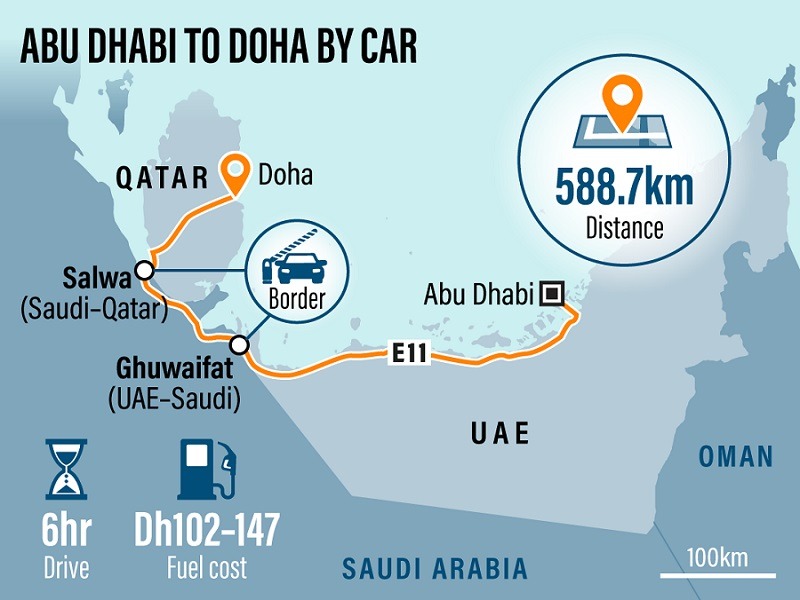
In this context, vehicle access becomes more than convenience. It becomes a practical travel solution. The GCC maintains one of the most advanced highway systems in the world. For example:
While flight paths are being restricted, land borders across much of the GCC remain open to civilian travellers with the appropriate documentation and visas.
A traveller whose flight from Dubai has been cancelled may find it easier to reach another functioning airport by road. If departures from Doha are limited, driving towards Oman or southern Saudi Arabia may offer an alternative route to catch an international flight.
For situations like this, long-term car rentals in the UAE can provide stability. Short-term daily rentals often include mileage caps or insurance restrictions that may complicate cross-border movement. Longer rental agreements provide more flexibility and planning time, making it easier for travellers to adjust their plans if air travel continues to fluctuate.
Our vehicles used for extended rentals are equipped with GPS tracking, roadside assistance that extends across GCC borders, and the required registration documents for customs procedures.
The objective is not to travel towards conflict zones. Instead, the idea is to use the region’s well-developed highway network to reach safer areas or airports that are still operating.
Beyond cancelled flights and delayed itineraries, there is a deeper human impact to being stranded. Reports indicate that tens of thousands of tourists and religious pilgrims are currently stuck across the region, staying in hotels, cruise terminals, and airport lounges.
One often overlooked challenge is the psychological effect of losing control over travel plans. When passengers depend entirely on airlines to reschedule flights, they have little ability to influence their own timeline.
Having access to a rental vehicle can restore a sense of independence. Travellers are no longer limited to waiting in a single location. Instead, they can move freely. They can buy supplies, relocate to a quieter area, or simply explore outside crowded tourist districts.
Families with children, elderly travellers, and large tour groups especially benefit from this flexibility. For group leaders managing logistics for pilgrims or organised tours, multiple rental vehicles can allow decentralised movement towards embassies, consulates, or designated meeting points.
For independent travellers, a car can transform a frustrating waiting period into a manageable situation. It allows them to continue exploring the region while monitoring their flight status.
Final Rentals is currently prioritising larger vehicles such as SUVs and vans to accommodate families and group travellers who need space and flexibility during the disruption.
One of the most common concerns raised by customers renting vehicles in Dubai or Doha right now involves insurance coverage. Many standard travel policies and most rental agreements include clauses excluding damages related to war, terrorism, or major civil unrest. During normal travel conditions, these clauses are rarely discussed, but in the current environment, they have become a central question.
Transparency is essential. In most cases, standard policies will not cover direct damage resulting from military actions or similar events. However, day-to-day risks in cities like Dubai or Doha remain similar to typical urban driving scenarios.
Potential risks are more likely to involve heavy traffic conditions, sudden braking, or congestion related to travel disruptions. Final Rentals has implemented temporary crisis guidelines during the current alert period:
Travellers seeking additional protection are encouraged to consider upgraded coverage packages, which reduce deductibles and include round-the-clock assistance.
Government agencies, including the UK Foreign Office and the US State Department, have advised travellers not to go to airports unless their flight is confirmed. This creates a dilemma. Travellers may need transportation to reach the airport, but hesitate to book it without flight certainty.
To reduce that uncertainty, Final Rentals has introduced temporary crisis flexibility for bookings across the region.
This approach allows travellers to secure transportation without committing financially if their travel plans change.
The Gulf region is home to a large expatriate population, with hundreds of thousands of residents from Western and Asian countries living and working there. Governments are preparing contingency plans that may involve assembly points at ports, military zones, or specific airports.
During such operations, public transport may become unreliable. Buses and taxis may be scarce, and metro systems could reduce service. For families needing to reach evacuation locations, having access to a private vehicle can provide a dependable final step in the journey.
To support this need, Final Rentals has created a basic evacuation mobility guide:
For expatriates who do not own vehicles, temporary rentals can help bridge the gap between home and evacuation sites.
Current estimates suggest that more than one million travellers are experiencing delays, rerouting, or uncertainty while passing through the Middle East travel corridor.
Air travel depends heavily on centralised infrastructure and airspace access. Road travel, by comparison, offers greater flexibility and adaptability during disruptions.
As a global car rental provider operating throughout Dubai and Qatar, Final Rentals is focusing on three priorities during this period:
Supporting cross-border travel and extended rentals that help travellers move between regional hubs.
Providing clear guidance on insurance coverage, security considerations, and vehicle reliability.
Offering adaptable booking policies and responsive customer support.
Geopolitical developments are outside our control. Operational readiness, however, is something we can manage.
During uncertain travel conditions, flexibility often becomes the most valuable resource. The ability to move when needed can make all the difference.
Stay safe. Stay mobile.