Old neighbourhoods of Tirana tell stories of Ottoman rule, Italian influence, and isolation during the communist era. When you explore these areas, you step into different chapters of the city’s past, where architecture, streets, and daily life still reflect history. As you move beyond the main squares, you will discover quieter streets, traditional homes, and local markets that show a more authentic side of Tirana.
Some historic neighbourhoods are easy to reach, while others are spread out or located on the edge of the city. Renting a car helps you save time and explore these places comfortably, especially if you want to see more in one day. In this guide, you will learn where to go and what makes each area special.
Tirana’s history comes alive in its neighbourhoods. Below is a list of must-see areas, each with a unique atmosphere and story. From historic districts in Tirana filled with Ottoman architecture to lively quarters reborn from the communist past, you’ll have a variety of cultural experiences.
Blloku is one of Tirana’s most fascinating neighbourhoods. During the communist era, this district was a forbidden zone reserved exclusively for Albania’s ruling elite. Ordinary citizens were barred from entering, and armed guards enforced its boundaries. Behind those walls lived members of the communist politburo, including dictator Enver Hoxha.
The neighbourhood featured elegant villas built by Italian architects during World War II. These were refined homes that symbolised power and privilege. Even today, you can drive past Hoxha’s former villa, a modest three-storey house. For decades, Blloku was an impenetrable enclave, completely cut off from the rest of Tirana.
After the fall of communism in the 1990s, Blloku transformed almost overnight. The once-silent quarter burst into life as it opened to the public. Today, it is packed with chic cafés, trendy boutiques, and some of the city’s best bars and restaurants. The contrast between past and present is striking. You can sip an espresso in a stylish café that was once a government minister’s residence.
At night, the area buzzes with energy as crowds gather for nightlife and live music. Yet traces of history remain, such as preserved buildings and subtle plaques. As you stroll or drive through, notice the Italian-style architecture and consider visiting the nearby House of Leaves, the former secret police headquarters, for deeper context. With a car, you can park in nearby paid lots and explore easily on foot.
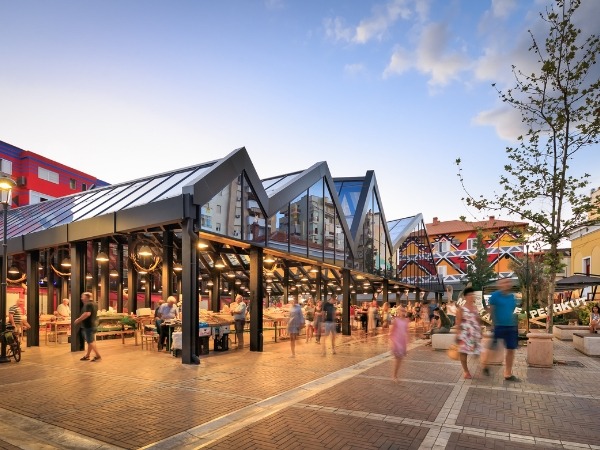
If you love local food, culture, and photography, Pazari i Ri is the place to be. The name means “New Bazaar,” but this historic neighbourhood has existed for centuries. It features a market square surrounded by restored traditional buildings with orange-tiled roofs. Vendors sell fresh fruits, vegetables, cheeses, and authentic Albanian delicacies. You’ll hear bargaining in Albanian, smell spices and ripe produce, and see colourful displays of seasonal goods. You can also enjoy traditional dishes at the small restaurants and bakeries around the market.
Driving here is convenient. It is located just east of the city centre, with street parking nearby and additional underground parking at the mall. Beyond the market, Pazari i Ri offers a glimpse into Ottoman-era Tirana. A short walk leads you to the Kokonozi Mosque, an 18th-century mosque that has survived for decades under state atheism. Nearby stands the Tanners’ Bridge, an 18th-century stone footbridge once used by leather tanners transporting livestock.
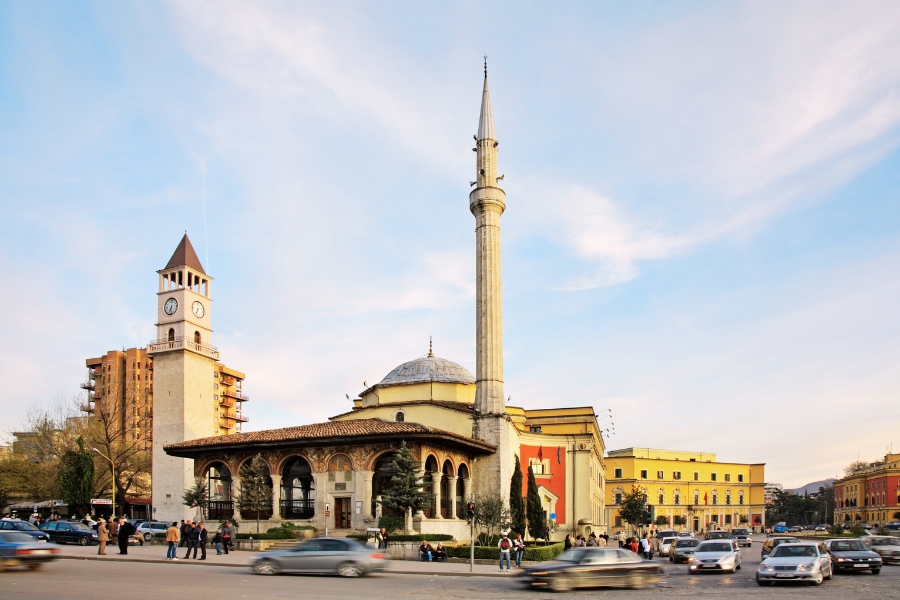
Though the river beneath it has long been diverted, the bridge remains preserved as a pedestrian monument. Close to the bazaar, you’ll also find the Et’hem Bey Mosque at Skanderbeg Square, one of Tirana’s oldest and most beautifully frescoed mosques. Visiting Pazari i Ri by car is easy and rewarding. It’s perfect for filling your boot with organic produce or handmade souvenirs.
On the eastern side of Tirana’s centre lies Brraka, one of the city’s oldest residential neighbourhoods. The neighbourhood is tucked around Haxhi Hysen Dalliu Street and the lanes branching off Dibra Street. While some streets have modernised, you can still find pockets of traditional architecture like old two-storey homes with wooden balconies, red rooftops, and vine-covered courtyards.
Brraka doesn’t rely on major attractions. Its charm lies in feeling like a preserved corner of old Tirana amidst the city’s rapid growth. A highlight of the neighbourhood is Villa Shijaku, an Ottoman-era house turned art gallery and café. This 300-year-old villa was once home to the celebrated Albanian painter Sali Shijaku. The house is a beautifully preserved konak, featuring antique furniture and traditional interiors. There is a small underground tunnel near the entrance. Outside, the peaceful garden courtyard serves as a cosy café.
Driving to Brraka is worthwhile if you’re interested in Tirana’s Ottoman heritage and quiet neighbourhoods. It’s easy to reach, and you’ll usually find street parking nearby before exploring the area on foot. While here, don’t miss walking over to the Tanners’ Bridge, located at the edge of Brraka near the Pazari i Ri district. This 18th-century stone arch bridge, about 8 metres long, is a tangible reminder of Tirana’s early trade routes.
Right in the city centre, hidden behind modern buildings and bustling streets, you’ll find Tirana Castle (Kalaja e Tiranës), also known as the Justinian Fortress. Today, it’s a compact historic site filled with cafés and boutique shops. What remains are sections of ancient stone walls, some dating back to the Byzantine era. These old walls hint at the city’s deep roots long before it became Albania’s capital.
Over the centuries, it evolved into a marketplace and gathering point along the old east–west trade route. The castle's interior has been transformed into a pedestrian arcade. Enter through the gate off Murat Toptani Street, and you’ll step onto cobblestone paths lined with cosy cafés, stylish restaurants, and artisan souvenir shops.
One moment you’re touching centuries-old stones, the next you’re sipping gelato or browsing handmade crafts. You may also find pop-up markets, cultural events, or a small photo booth inside. Accessing Kalaja e Tiranës by car is easy. There are several nearby parking garages, such as those under Skanderbeg Square or by the Plaza. Once inside, take time to read the informational plaques about the fortress walls.
For an entirely different historical experience, drive out to Kombinat on the southwestern edge of Tirana. The name “Kombinat” refers to a large industrial complex, and this area indeed grew during the communist era as a major manufacturing hub. Located about 6 kilometres from the city centre, Kombinat was home to the Stalin Textile Factory, once one of Albania’s most celebrated post-WWII industrial projects.
For decades, the suburb even carried the full name Kombinati Stalin. Thousands of workers produced textiles here, and an old statue of Stalin reportedly stood proudly at the site until the fall of communism. Today, much of the factory lies abandoned or repurposed, but visiting Kombinat offers a glimpse into Albania’s mid-20th-century history. As you drive the main boulevard, still called Bulevardi Kombinat, you’ll see remnants of red-brick factory buildings, tall chimneys, and former workers’ apartment blocks.
Kombinat is not a polished tourist attraction, but that’s exactly why it stands out as one of the hidden gems in Tirana. With a car, it’s easy to reach. Follow the old road toward Durrës to explore the neighbourhood with urban art on old walls, community centres breathing new life into abandoned structures, and the monumental entrance of the former textile factory.
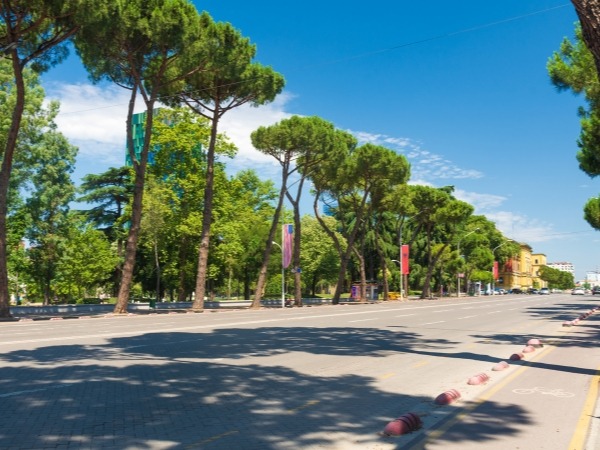
Having a car in Tirana opens up opportunities to see more, but a few tips will help you navigate effectively.
Exploring Tirana’s historic neighbourhoods with a car is like opening a series of time capsules. Driving allows you to stitch together these experiences in one grand tour. As you travel back to your hotel or onward to the next Albanian destination, you’ll carry with you the sights and stories of local neighbourhoods in Tirana that many visitors miss.
Rent a car in Tirana with Final Rentals to make this journey smooth and stress-free. With convenient pick-up at Tirana International Airport and downtown, you can land and hit the road as soon as you land. Final Rentals offers a wide range of vehicles, from compact cars perfect for city streets to spacious SUVs ideal for exploring beyond Tirana. The booking process is simple and comes with instant confirmation. For extra convenience, you can also download the Final Rentals app on Google Play and the App Store.